Untangling Complexity
Vince Beiser on tackling thorny issues and making a career in journalism
I’m on the road reporting this week, so I’m handing the reins over to the wonderful journalist Rebecca Tuhus-Dubrow. For today’s newsletter, Becca interviewed author and freelancer Vince Beiser.
Becca regularly edits The Reported Essay, and she also spoke to me recently about her approach to freelancing and writing her nonfiction book, Atomic Dreams, which was named one of the “best books of the year so far” by The New Yorker. Becca’s most recent feature story came out last month in The Guardian: “She took chickens from a slaughterhouse. Was it a rescue or a crime?” edited by Jessica Reed, another guest who delved into pitching and stories for The Reported Essay.
I found Becca and Vince’s conversation helpful and insightful, and I hope you do too.
—Erika
Rebecca Tuhus-Dubrow
To transition away from the fossil fuels that are disrupting the climate, the world will need legions of solar panels, wind turbines, electric vehicles, and batteries. Despite recent setbacks in the U.S., all of these technologies are spreading rapidly throughout the globe. Yet all of them require metals—such as lithium, cobalt, rare earths, copper, and nickel—as do our phones and laptops. And mining for metals is far from a benign endeavor.
As journalist Vince Beiser writes in his recent book Power Metal, “the electric car I was so proud of, the digital devices I use every day and the renewable energy I was counting on to power them, are together spawning massive environmental damage, political upheaval, mayhem, and murder.”
Beiser’s illuminating book explores the dark side of what he dubs “the electro-digital age.” But he also insists that these downsides aren’t a reason to give up on renewable energy or electric vehicles. Rather, we need to reckon with the problems so we can find ways to alleviate them. In his reporting, Beiser takes us to a lithium mine in Chile and a scrapyard in Vancouver; he tags along with e-waste recyclers in Lagos and introduces us to the founder of iFixit, a service that equips people to repair gadgets instead of tossing them.
Beiser’s book resonated with me because, in writing my book on nuclear power, I also came to see the energy landscape as far less straightforward than I’d realized. That is one of my favorite parts of reporting: gradually unearthing complications and contradictions, until simplistic orthodoxies (e.g., “renewables are good,” “nuclear is bad”) give way to a more textured and accurate picture. But navigating how to portray this complexity is one of the hardest parts of the job.
Beiser and I both began with a concern about climate change, and we were both compelled to question our assumptions. Although we focused on energy, I see the challenges we faced as applying to all journalism. How can we stay rooted in our values without getting blinkered by ideology? How can we embrace curiosity even when it leads us to uncomfortable conclusions? How can we acknowledge nuance without devolving into false balance?
In Power Metal, Beiser meets these challenges with integrity and grace. So I was excited to talk with him for the Reported Essay, about his book and his career as a freelancer.
Vince has reported from over 100 countries, states, provinces, kingdoms, occupied territories, no man’s lands, and disaster zones. He has exposed conditions in California’s harshest prisons, trained with US Army soldiers, ridden with the first responders to natural disasters, and hunted down other stories from around the world for publications including Wired, The Atlantic, The Guardian, Mother Jones, Rolling Stone, The Economist, The Los Angeles Times, The Wall Street Journal, and The New York Times.
Our conversation has been edited for length and clarity.
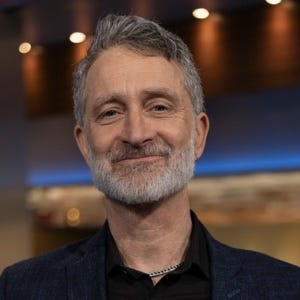
Can you start by talking about the origin of this book?
It started when I got my first electric car. This was seven or eight years ago. It was a very glamorous used Nissan Leaf. I got it because I was living in LA with my wife and my kids, and all of us were very aware of the climate crisis. I felt like, “I’m a hero now. I’ve bought my electric car.”
But I’d been doing reporting on supply chains and how the raw materials that make our lives possible get to us. I’d just written a whole book about sand, of all things, which is all about that. So I was very much in that mindset, and I started looking into it and was horrified to discover that this supposedly green, clean car that I owned was made possible by the bulldozing of rainforests in Indonesia, and children being put to work in mines in Congo, and rivers being poisoned and warlords getting rich, and all these terrible things. I thought that was a really important and interesting story.
But I’ve done so many stories, like most journalists, where we find a problem, and we’re like: “Oh my God, this is a terrible problem. The end, goodbye.”
I felt like that’s really not enough. The conclusion you would draw is “don’t get an EV.” But that’s not the solution, because we need to switch over to EVs, we need to switch over to renewables to stave off the biggest crisis of all, which is climate change.
I wanted to grapple with the idea that yes, EVs cause problems, wind turbines, solar panels, the whole machinery of renewable energy, and all our digital tech, by the way, causes all these problems. But we need them. So how can we keep moving forward with the energy transition without destroying the planet and ruining the lives of millions of people?
So when you started working on this project, did you start by writing an article or multiple articles? Or did you just go for the book proposal?
I went straight to the book proposal. I’d been looking for a book idea for a while. I wrote the book about sand, it did pretty well, and I really wanted to do another. So I’d been casting about for a book idea, which is hard, as you know. An idea for a book that is worthy, and that you can sell.
I had a good relationship with my agent, Lisa Bankoff, and with my editor on the sand book, Jake Morrissey at Riverhead. So I had a place to pitch the book to, and because I’d already done the sand book, and I had a long track record, I was able to sell the book without having to do the full-scale, 50-page treatment that you usually have to do.
I got the book contract first, and as I was going along and doing the research, I spun out magazine articles along the way to help subsidize the whole process.
You did a lot of travel. Was that mostly for magazine stories?
Each trip was different. I went to Chile, I went to Nigeria, I went to Europe, I went to a bunch of places in the US and Canada. Every trip was for the book. And then it’s like, OK, now how can I get somebody to pay for me to go there?
Sometimes that was magazine assignments. Or sometimes I’d just go, and do the reporting and then find somebody to sell it to. I got some little grants, like from the Pulitzer Center, to help out. Some of it was just opportunistic, like, my dad and my brother live in Toronto, so I was out in Toronto for something or other, and while I was there, I just tacked on a little trip to this remote mining district in Ontario.
So I sort of had to put together a little funding package for each one.
I think I published two or three articles before the book came out, and then published about five or six as excerpts or adaptations right around the time it came out.
Once you were working on the book, how did you determine the structure? Did it change much from what you proposed in the proposal? You’re kind of our tour guide, walking us through all this. Did that evolve much while you were writing?
It changed quite a bit. Basically, I was just like, there’s all these metals. They cause all these problems. There’s all these possible solutions. They also have problems. That was kind of the idea.
So I guess that really big-picture structure stayed the same. But I didn’t know how I was going to organize it. Because there’s lots of different ways you can do it. You know, each chapter could be about a specific technology, or a specific metal, or a step along the supply chain, or my journey to figuring it all out. In the end I split the book into two main parts: “Problems,” the many harms caused by critical metals. And “Solutions,” in which I take a close look at the promise and limitations of things like recycling and reusing gadgets.
I thought I was really gonna emphasize digital tech. You know, talk about all the metals that go into phones and laptops, mostly because it’s kind of sexier. That’s something people can really relate to. “Oh my God, the phone in my hand is thanks to children working in cobalt mines.”
But as I started researching it I came to realize, renewable tech and digital tech use the same basket of metals, but quantity-wise, the volume that goes into renewables and EVs is exponentially more than digital tech. Really, that’s what’s driving the problems. So I had to really reshape it in that sense.
Originally it was like, “Oh my God, digital tech! And also renewables.” It became, “Oh my God, renewables! And also digital tech.”
So it was a shift in emphasis. I wonder if you ever had concerns that, by exposing the downsides of electric vehicles and renewable energy—both of which you think we need—you might give ammunition to opponents of those technologies? I’m asking because I think this question comes up for journalists in lots of different ways. When we try to be nuanced in exploring an issue in today’s political environment, we might have those worries.
Yeah, I did and I do. And I know in fact that some folks have picked up on it, and have used my book for exactly that line of argument—“See, EVs are terrible.” That’s a problem, for sure. Throughout the book, and when I talk about it, I really hammer on how, yes, these things cause problems—but we need them.
And there are ways to mitigate those problems.
Yeah. And I feel like what I often struggle against is this sort of panacea thinking. We just do this thing, and there’s no more problem. If we just recycle, if everybody drives an EV, that takes care of it. And in real life, there’s no such thing. Everything has a cost. And the question becomes, how do we limit the damage?
What was the hardest part for you of writing the book?
The hardest reporting was finding a way into the gray-market e-waste recycling industry. I knew that was a thing. At a certain point I learned that people are tearing apart electronics and pulling out the little bits of recyclable metal, and in the process, releasing all kinds of toxins. I really wanted to write about that.
I needed to go to some developing country to do that, and I needed an in. There are organizations that work in ways that are connected, but most of them are somewhat removed from the people who are actually doing it. So I spent a long time getting in touch with lots of different grassroots groups all over the world, saying, “Can you introduce me to some folks who are actually doing this work?” It took a long time. I finally got someone who could bring me into that world of e-waste scrappers, in Nigeria.
So you contacted a nonprofit or grassroots organization that worked with the people?
Actually, the ones who got me in were this Dutch company that imports used or dead cell phones from Africa into Europe to be recycled sustainably. So they work with a few people who go out and buy stuff from those street vendors, and they put me in touch with their sort of agents on the ground, and those guys said: “Yeah, you can come with us.”
Let’s talk about your career more generally. Did you always want to be a journalist?
I did not. I just fell into it by accident. When I was in college, a long time ago, I was very idealistic and political, and I got very caught up in the Israeli-Palestinian issue. And I spent a year abroad in Egypt and learned Arabic. I’m Jewish, so I was sort of raised with this pro-Israel outlook, and I got to Egypt and I really got to see the story from the other side for the first time.
So I wound up getting a degree in Middle Eastern studies, and then when I graduated, I was like, Okay, I’m just going to go over there, and fix it. I’m the guy who’s going to solve the problem.
How’d that work out?
It worked out great! You know, that’s why there’s no more problems in the Middle East. You’re welcome.
So yeah, just absolutely clueless, right? But full of the foolish optimism and just rank idiocy of youth. So I just took myself over to Jerusalem and started looking for jobs. I thought I’d work for a human rights group or an aid group, whatever, I’m open. But of course I didn’t have any real skills. I wasn’t an engineer or a doctor or anything like that.
That’s how we all end up in journalism, right?
Basically, right, you can’t do anything else. So yeah, the first thing that came my way was a job with Palestine Press Service, a Palestinian news agency. It was founded by Yasser Arafat’s mother-in-law. My first boss in journalism!
It turned out that the only real skill that I had, the only real thing that I learned in college, was to take lots and lots of information from lots of different places and then boil it down. That’s something you learn with a liberal arts degree. And that’s one of the things that journalists do.
And what I really wanted to do was to get out, be in the middle of the action, and see where things were popping off, and talk to people who were making things happen. And that’s the other thing that journalists do. So it just kind of fit. I just kind of fell into it and haven’t been able to get out since.
Have you been a freelancer for most of your career?
Mostly. I’ve had a few staff stints. At one point I was the New York correspondent for an Israeli news magazine. Later on I worked at Mother Jones for a few years, and at the Oakland Tribune, which no longer exists. Later still I worked at Pacific Standard Magazine.
RIP.
Yeah, I helped to start that one up. The last print magazine launch in America, probably.
How did you get involved in starting it up?
So before it became Pacific Standard, it was called Miller McCune. The worst name! I mean, calling people up and telling them you’re from Miller-McCune Magazine—God.
I was a contract writer for them. I was getting a regular stipend and had to produce X number of articles per year. Which is always kind of the holy grail as a freelancer. That’s the best, where you don’t have to go into an office but you’re still getting a steady income.
I got to do some really cool stories for them. And at a certain point, Sarah Miller-McCune, the super-rich lady who was bankrolling the whole operation, decided that it needed a complete refresh. They hired Maria Streshinsky, who’s a really great editor, who went onto Wired. She came in with a mandate to basically relaunch it, and she knew about me from all the stuff I’d done for Miller McCune, and offered me a staff job as an editor. At the time I had one of my periodic breaking points with freelancing, which was like, I can’t keep doing this. It’s too hard, it’s too heartbreaking, the pay is too terrible. So yeah, give me a staff job. Let me just go into an office and collect a weekly paycheck.
How long were you there?
Two, three years.
And then you went back to freelancing? You were ready?
Yeah, I had the same experience at Mother Jones, when I was an editor there. It was a great job. Like if you want to be an editor, those were both great jobs. But really, editing is an office job, and that’s not what I got into this racket for.
What about writing? I think for some journalists their passion is reporting, for others it’s writing. Some reporters hate writing and others like it.
Yeah, the reporting is the most fun part for me for sure. I find writing hard. I don’t really enjoy the process of it, but I love having done it. I like to look back on it, and there’s definitely parts of it I enjoy. Once you’ve got that first draft out, I like sort of polishing the sentences and playing around with language. Yeah, “enjoy” isn’t quite the right word.
How do you see your Substack, also called “Power Metal,” fitting in? And when did you start that? Because obviously it’s the same theme as your book. So did you start that when you were working on the book?
I started it up in that six-month lull between when the text for the book was finalized and when it actually came out. I wanted to try doing a Substack, really hoping that I could make some money off of it, mainly, because, you know, the whole freelancing game is only getting harder and harder. And that’s one of the ways that some people are making a living these days.
The hope was, basically I’ll make it the weekly companion to the book, and the Substack will promote the book and the book will promote the Substack, and it’s a way of keeping me up to speed, because I need to stay up to date on all these issues anyway. So why not get some added value, use some of that research, turn it into a product that I can also put out there.
And how has it turned out? It seems like it’s a good complement to the book.
It’s been okay. I’ve earned sub-minimum wage on the hours that I’ve put in for the last year and a half.
Which I feel like is common for journalism.
Totally. But I can’t keep doing that. There’s other benefits to it. I’m putting out journalism that I hope matters. It’s all stuff that I think is genuinely important and that I want to get more attention on, which is the number one reason why I got into journalism in the first place.
Also it functions as a bit of a publicity vehicle for the book and for me. And just kind of learning a new thing. Learning how it works, how you sort of have to structure your week to make it happen, and the software and the marketing.
For some authors, once you publish a book, you’re eager to move on to the next thing. But clearly you are still interested in this topic. Are you thinking about going in a different direction or is there just so much there that you want to keep your focus on this?
I don’t want to spend the rest of my life writing about critical metals, that’s for sure. But one good thing is that it’s a really hot issue. So it feels like it would be sort of crazy to just walk away from it right now. And you know, I’m still in the first year since the book came out, so I’m still doing a lot of talks and panels about it.
So it has been almost a year since the book came out, right? We tend to think that you do a big flurry of publicity and promotion right around pub date, and then it kind of subsides. Is that a misconception, or do you think that’s changing?
Most of it for sure is in the first couple of months. But because the issue’s in the news so much, I’m still getting a fair number of requests to do interviews, and there’s a lot of opportunity to do stuff like op-eds. I think of that first year being a complete cycle, because it’s not only publicity, but awards. You apply for awards and those awards then sort of pitter-patter out over the course of a year.
Have you gotten much support from your publicity team? Or have you had to do a lot of it on your own?
I got really lucky, I think. My publicists on this book, Bianca Flores and Ashley Garland, they’ve been great. They got me a bunch of interviews, got me on the Daily Show, they’ve been great about sending review copies to anyone I suggest, no questions asked.
So I can’t really complain. But of course, a lot of it’s on me. Nobody cares about your book more than you do. And now more than ever, there’s literally an infinite amount that you can do to try to promote your book and yourself. There’s no end to the number of podcasts you can pitch yourself to, newsletters like this, libraries, book clubs. There’s literally—and I mean literally in the literal sense, not the way the kids use it.
Which means the opposite.
Which means the goddam opposite, which drives me crazy! That’s another story.
But there’s no end to the amount of self-promoting that you can do, and that you have to do. The best publicist in the world can only do so much, because she’s got 50 other books that she has to promote.
And I feel like that’s an advantage to having been a freelancer so long is that I knew that going in and I don’t resent it, and I don’t hold myself above the tawdry work of selling the book.
One last question: What’s your advice for people who are trying to make a career in journalism, especially freelancing?
[Takes a deep breath.] Get out! Save yourself while you still can.
Really, honestly, the best advice that I have is probably the most depressing. Which is, if you want to be a full-time freelancer, get yourself some kind of other side gig.
Yeah. That’s what I’ve always done.
In my case, it’s real estate. My wife and I, the first house that we bought was a duplex. We lived in the back. We rented out the front. That way we were able to get into the LA market. And we still own a house in LA. Anyway, long story short, I earn enough from journalism to make a very precarious living. But I could not afford to live the way that I live, in an expensive city like Vancouver, sending my kid to college and all the rest of it, if we didn’t also have a rental house that’s kicking off income. It’s extremely difficult to make it if you don’t have some non-journalism source of income.


Great interview! And loved the shout-out to Pacific Standard, Vince.