

Last year, Usha Lee McFarling took the helm of the Knight Science Journalism Program at MIT, after the retirement of its previous director, the Pulitzer Prize-winning journalist and author Deborah Blum. Each year, 10 science journalists from around the world join the nine-month program to pursue a passion project while auditing courses, building connections, and focusing on career development. Fellows receive an $85,000 stipend, a travel and housing stipend, and health insurance.
I was fortunate to first cross paths with Usha when we both worked as staff writers for the Los Angeles Times in the 2000s. I remember the science corner of the newsroom, where Usha sat with a team of brilliant writers and editors. She reported from Antarctic research stations, traveled with walrus hunters to understand how climate change was affecting Inuit communities, and covered the SARS pandemic outbreak from Toronto. In 2007, Usha received a Pulitzer Prize for explanatory journalism for a series reporting on distressed oceans around the world.
Notice the precise way she uses reporting and language in the top of her 2003 story, “Melting Ice, Winds of Change,” on the opening of the Northwest Passage. Usha takes readers on a journey, floating in the bird’s-eye view, then shifting the camera lens closer until we see bones. The story cuts to an explorer who wants something. Scene-setting, history, narrative stakes, and character development, all in three concise grafs.
RESOLUTE BAY, Canada — For 500 years, explorers nudged their ships through these Arctic waters, vainly seeking a shortcut to the riches of the East. The Northwest Passage, a deadly maze of sea ice, narrow straits and misshapen islands, still holds the traces of those who failed.
There are feeble cairns, skeletons lying face down where explorers fell, makeshift camps piled high with cannibalized bones and, on one rocky spit, a trio of wind-scoured tombstones. Whole expeditions, hundreds of men and entire ships, are missing to this day. The first explorer to survive a crossing, in 1906, spent several winters trapped by ice.
Despite that -- or maybe because of it -- Canadian Mountie Ken Burton wanted nothing more than to join the pantheon of polar explorers who had threaded their ships through the passage’s narrow ice leads and around its shimmering blue-green icebergs.
Usha previously wrote for the Knight Ridder Washington Bureau and the San Antonio Light, later becoming a national writer for STAT, where she unraveled how white scholars colonize research on health disparities and exposed the lagging diversity in orthopedics. Her reporting has also received the Polk Award, the Victor Cohn prize, Edward R. Murrow award, and the Bernard Lo, MD award in bioethics.
But back when Usha first decided that she wanted to be a science writer, she didn’t realize how competitive it would be. She applied to science sections of the most prestigious newspapers, receiving no response. She became a Knight Science fellow herself, and when she eventually got hired at The Boston Globe, her editor surprised her: He’d held onto her application letter for years. She conveyed such enthusiasm and commitment to the field of science writing, her words made a lasting impression.
Today, Usha pays close attention to applicants’ personal statements. Tell us who you are, she reminds potential candidates. It should not just rehash your resume, she explains. It needs to tell a story, offer a compelling anecdote—as the best writing does. It should capture what drives you, and what defining moments have led you to this turning point in your life and career. Where do you want to go next?
In our Q&A, we talked about writing tips, fellowship advice, and the winding path to becoming a science writer.
Usha is also the publisher of Undark Magazine and serves on the board of the Association of Health Care Journalists, which is hosting an event in Los Angeles for reporters on AI and health care Oct. 8 and 9, where she will also moderate a session on “The AI gold rush in health care: Promises, pitfalls and who pays the price?”
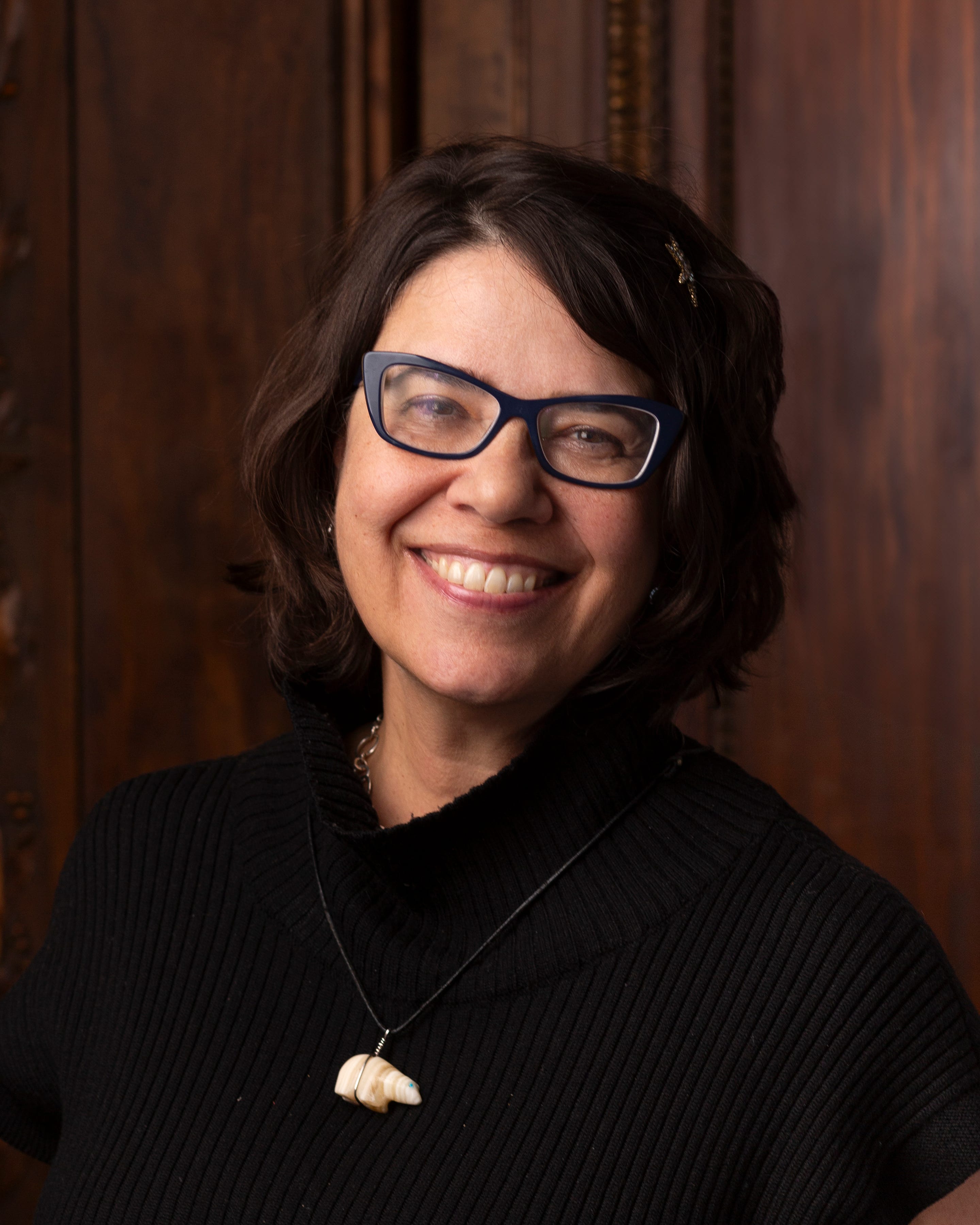
How did you come to science reporting?
I decided in college to earn a biology degree, but I loved writing. I come from a family where there’s a lot of doctors, so there was a pressure to enter medicine. But it wasn’t my passion. I was really conflicted about what to do.
My advisor happened to be the dean of the medical school, and he said, “Why don’t you be a science writer?” This was a few decades ago, when science writing was very much thriving everywhere in magazines and science sections. After he said that, it was like the clouds parted, and rays of sun came through, and I found my path.
But we didn’t have a journalism school at Brown, and I didn’t really know what I was doing, or have any career advice. I thought, “well, I’ll work at The New York Times, or The Boston Globe would also be fine.” They had the best science sections that I knew of. So I applied, and of course I heard nothing back.
I had done internships at the Associated Press and National Geographic, and, as far as I know, was the first science writer for the Brown Daily Herald. So I tried to get as much experience as I could, and I wrote for some medical newsletters, but it really wasn’t enough to get the type of job I wanted. So I went to a training program that used to be run by the Maynard Institute. It was a summer boot camp for journalists.
I worked with all these great editors, and we produced a newspaper on a weekly deadline. From there, I got recruited to the San Antonio Light newspaper. I worked in a zoned edition, and covered community news, and I still think working in local news is such good training for science journalists.
I also think it’s great to get a PhD and then learn journalism and switch over to science writing, or come through trade publications and rise up to bigger general publications. But for me, I was covering cemetery cleanups and Eagle Scout badge ceremonies, and school boards. You learn how to make stories out of events that are not necessarily huge or dramatic. I think that really helps in science writing when you’re writing about more arcane, difficult topics.
But ultimately, I just really wanted to be a science writer. So on my weekends I would try to do stories at the hospital. I did a story on the youngest infant to get a heart transplant because it happened to be at the local university hospital.
When I applied to the Knight Science Journalism Fellowship, it wasn’t mid-career for me, because I was still so young. But I think they recognized that I wanted to be a science writer and I needed help. The other route would have been to go to Dallas or Houston papers, which had amazing science sections at the time.
But while I was at the fellowship, my newspaper closed. It was a two-newspaper town, and Hearst decided to close the San Antonio Light and keep open the rival newspaper, the San Antonio Express-News. We were all laid off and that was really hard.
I was fortunate enough to be in the fellowship with The Boston Globe’s health and science editor. He offered me a one-year position to cover for someone on leave. So I ended up landing in one of the nation’s premier science sections after all.
A few weeks into the job, that editor, Nils Bruzelius, came out of his office and threw a piece of paper on my desk. I looked at it, and saw my dot matrix-printed application letter to him. He kept it all that time. He knew I wasn’t ready to work at The Boston Globe when I first applied. But he said he thought I seemed interesting. So maybe don’t be afraid to send out those shots in the dark. You never know.
What do you think it was about your application and cover letter that he found interesting?
I think he saw how much I wanted to be a science writer. But after landing there, I had a lot of zigzags in my career, and I think many science writers have. At the Globe, I was working weekend cops a couple days, and then science a couple days, and one week, I recall covering a double homicide in Chinatown, and then interviewing the person who won the Nobel Prize that Monday morning.
It was difficult for me to just switch back and forth. And I was interviewing people who were making such cool discoveries and thinking how science seems so exciting and awesome. Then I thought, “maybe I should have been a scientist.”
So I decided to leave the Globe and I went to Berkeley to earn a master’s degree in animal behavior. I found a professor who was studying hyena colonies and the sex differences in them. I studied desert wood rats that can build little homes. They create amazing architecture, not to the level of beavers, but similar with rooms and protection for the babies. It was super fun.
But I realized about a year in that when you choose a path in science, you’re in this very narrow rivulet, and I loved all the different topics. Science writing was still pretty robust, so I was getting a lot of job offers while I was in graduate school.
When I left the Globe, my editors and others asked me, “What are you doing?” I said, “Maybe I’ll do this and become a better science writer.” And they said: “No, you’re going to be a cheerleader for science. You’re not going to be skeptical.”
What I found was that scientists are the most critical of all. They rip each other’s papers to shreds. I think I became much more critical of science, which I think we need to be as science writers. So I thought it was very helpful. Learning how to ask smart questions, just understanding the research process, what people have to do often to get results, how difficult it can be. It’s made me a better science reporter.
So I left with a master’s degree. I went on to be a science writer in Washington, D.C., which I highly recommend doing. And from there, I went to the Los Angeles Times, where I worked with you, and other amazing people, and legendary editors. We had so many science and health writers at the time – it seems unbelievable now.
I do remember the science team being so robust, and you had a whole crew. It seems like science seems to be the first place that a lot of papers cut.
Yeah, because even then we also had a whole separate health section. I just didn’t realize at the time how special that was. L.A. gets this stereotype of being full of celebrities and people drinking expensive smoothies in their yoga pants. But no, people are also building spacecraft to send to Mars, and they’re curing cancer, and a lot of tech is being created there. So it was just a great place to be a science writer.
After six years there, I took time off because of my family and my children. My partner needed to move across the country several times for his work. We made a lot of moves in just a short couple of years, and I had a baby and a toddler.
I think taking time away is something people shouldn’t be ashamed of. When I was fortunate enough to win the Victor Cohn Prize, I shared that story publicly for the first time—about how I left journalism for personal and family reasons, and even though I had won a Pulitzer Prize at the LA Times, it was very hard to get back in.
I was pitching freelance stories and having long discussions with assigning editors and then seeing the same idea published a few months later in those publications. I wasn’t getting assignments, and maybe I’m just not that good at being a freelancer. But I thought they were good ideas and I couldn’t get any traction. So I’m always wanting to support freelancers. I know how hard it is.
And then I found STAT, which had just started. I knew one of the managing editors, Stephanie Simon, from the LA Times. I started freelancing for STAT. Then I became a contributor. Then I came on staff.
I was there for 10 years. It was terrific to be at a place that was unapologetically into science, and, with Helen Branswell, did the defining COVID-19 coverage. We all became pandemic reporters, and that launched me into looking at racial disparities, and who was dying at higher rates from the virus. I think because I’m a science reporter, I was asking “but why are they dying at higher rates?” I really wanted to not just report the numbers but understand what was behind them.
The more I looked into health disparities, the more stories I found. I’m very proud of the work I did early on on climate change at the LA Times, and I’m, of course, very proud of the Altered Oceans series that won the Pulitzer. But the work I’m proudest of is on racial health disparities. It’s painful now to look at how a lot of that kind of research is not being funded, or people are scared to even talk about it. It’s a real shame for our country.
Do you think there’s a different kind of appetite today when it comes to the kinds of stories that you were doing at STAT? Are they harder to get published now?
At STAT and other places, people are continuing this line of reporting. But people are also very busy covering the Trump administration, which creates a lot of news. So I was just fortunate to be able to focus on that full-time as a beat.
I think there’s a huge appetite for this kind of reporting. Knowledge really increased because of COVID and the Black Lives Matter movement, and that knowledge can’t stay in a box. I feel like there is and will be a push to continue this research and find more ways to do it, and that’s going to be a very interesting and emerging story to cover. It’s also important that reporters track the impacts of some of these cuts.
There’s great science journalism happening out there all the time. This is still a great field to be in. But it’s often seen as a luxury, and I would argue it’s exactly not a luxury when we’re reengineering human genomes and tinkering with fetuses, and when we’re thinking about geoengineering our climate or how AI could disrupt human civilization. These are things that affect everything and affect all of us.
I found the LA Times to be a great place to find mentors, but I’m wondering for you, were there mentors who really inspired you in science writing? How did you find your way in the field?
I joke that I never let my editors go. Just a few weeks ago I had dinner with my retired editor from The Boston Globe and I’m always texting Gideon Gil, my terrific editor from STAT. Great editors take so much care with your work. It’s almost like it’s fragile. They don’t want to break what you did.
I would always listen to Steve Padilla. He’s so wise, and we bring him in to talk to the fellows. I also got advice early on to keep a “good stuff file,” and I used to have a literal folder with printouts or clips from newspapers. I think I got this from Gary Blonston, who was a legendary writer at the Detroit Free Press, and was the head of the Washington Bureau at Knight Ridder when I worked there—he called these stories “Hey Marthas” – such good stories in the paper that someone would be reading them at breakfast and then say “Hey, Martha, you’ve got to read this.” One piece I had in the good stuff file was Jon Franklin’s amazing story, “Mrs. Kelly’s Monster,” which he won the first explanatory writing Pulitzer for. I still advise people to read it. It is such a classic.
Even if you’re at a daily cranking out 400-word pieces, I always tell people to keep a file of stories that you love, and even if it’s a super long New Yorker article, and you can’t possibly be doing that right now at your stage. Keep them to get inspired, and as Steve Padilla always says, a short story can be amazingly written too.
I also had those clip files. I still have them in my office. I don’t print the stories out now. But I still have manila folders that I have saved from back in the day. Yes, studying them is the best kind of training. There are so many resources out there now, especially for freelancers and for writers who are trying to do more of this work.
It’s nice to annotate them. And Siri Carpenter has a book out now with annotations of really great science pieces. Oftentimes, The Open Notebook and Nieman Storyboard go through the stories line by line. I love that, hearing what you left out and what you didn’t.
I also love prose. When I was a fellow, I got to take a writing class with Jamaica Kincaid, who’s one of my favorite writers.
I think it’s so fun as a writer to stretch and push boundaries, even at a traditional news outlet, if your editor is game for it. But I think you have to have the confidence to do it, which can come from reading great novels and poetry.
Do you have any tips for science writers who want to infuse more effective storytelling techniques into their own work and reporting?
Some of these science topics are tough, and you want to be clear and lucid. I think Sharon Begley—we lost her so sadly too young—but she was a master at this. I think one of her best pieces ever was on how Alzheimer’s researchers were setting back research because they were all focused on one idea and were pushing the others out.
But in terms of telling a story, there is always a human behind it, and it can add so much to add that human story and history, a person’s origin story, to what you are writing.
Make sure to observe: what do things look like, sound like, feel like. Take pictures when you’re reporting so you’ll remember or jot down what the sky looked like so your stories can be richer and more visual and not just words and thoughts. I also love story breaks, because I feel like it’s so much easier to write a chunk than a whole story. When you’re writing long, that’s really hard. So I love chunking.
I like to call them mini chapters within a longform story.
Exactly, and each one has a lede, and is a little story in itself. I think they are a service to the reader too, because there is a visual break, with asterisks, or a line, or some design to break up a longer story.
You can also change scenes, or begin in medias res to another person. Now, we’ve flashed over here.
Yes, and I like this idea of narrative braiding, where you can have a chunk about the science, and then a chunk about the person or whatever your narrative is, maybe about the place, and then the science again. Some people are really good at braiding. It’s challenging, but I think this is what’s so exciting about writing. You can constantly grow as you are doing it.
There is a book called “Why Fish Don’t Exist,” by Lulu Miller. It’s so good. It’s a personal story, but it’s also about science, about the history of fish classification. It is a masterclass in braiding and reporting.
I also think a lot of times when I see younger writers struggle, it’s because they haven’t done enough reporting. It’s a hard thing, because people can also report forever and not leave enough time for writing. But I think sometimes reporters forget that they can go back and call someone if they’re missing something.
I mean, it sounds so basic, but I feel like sometimes people feel like “okay, I’ve done my reporting and now I’m going to write.” Like they’re separate, but they’re not. They’re so interwoven.
That’s really important, especially if you want to do something that’s not just on a daily deadline. Or going back to think about how you can ask questions and create stronger key scenes. Or getting more inside of the journey.
The process of science is so interesting, and as a science writer, you’re often privileged to be in places like Antarctica, or in an animal research lab, or an oceanographic research vessel in the middle of the Pacific. You can make readers feel like they’re there too in a little way.
Eric Boodman is another great narrative science writer. He’s so good at asking questions like “what color suspenders were you wearing?” Some of it doesn’t even get in the story. But when you read a story, there’s such a richness to it.
The last thing I’ll say on writing is oftentimes you’ll do a study story, because this is the bread and butter of science writing. Of course, it’s very important to talk to the study’s author, but you also want to get outside the bubble. Who else in the field can you talk to? Is there someone who might have done similar research previously, or someone who might have reviewed the paper or might have an alternative take or a smart criticism to take into account?
I do think the smartest science stories have nuance, and that can be harder to write. And it’s something many of the reporters at Undark Magazine tackle, writing about stories that have no simple answer.
It’s a writing challenge, because you don’t want to bog people down and confuse them. But there is a way, with clarity, you can help pull people into a story, and I think that’s important because science is beautiful, but also troubled. Not all people in the field are noble. As reporters we just can’t be taking things at face value.
People are so lucky to have you as the director of the Knight Science Journalism Program. Can you talk about how the fellowship works, how it’s different now?
The fellowship is 43 years old, so it’s been around a long time. We lost our founding director last year, and that’s been painful because he was my director, Victor McElheny, and I really loved him. He was so supportive. He passed away before I moved to MIT. He was this legendary science writer. He realized that we needed a program where science reporters could get very sophisticated about science, and learn, and become the best at their craft.
So people get to spend an academic year at MIT, from mid-August to mid-May, taking classes, working in labs, doing a research project. Some people get up to speed on a new topic. Some people work on a book proposal. Some people learn new skills. We have a class of ten fellows for the whole year, and one fellowship for a reporter from Africa and the Middle East, which is funded by Nature in honor of the pioneering Egyptian science journalist Mohammed Yahia. We also encourage them to have fun. Some people have learned how to sail or scuba dive through the recreation program. In some ways, it’s a break from the daily grind, but it’s also a potential opportunity for huge growth.
I’m so happy we can offer it now when people sometimes are struggling. Our challenge is that there’s fewer people applying who are established as official science writers at particular publications. So we’ve really had to think about what it means to be a science journalist today with all the challenges facing our field. Our applications will open later this fall and we’re eager for eligible people to apply.
You have to be a serious journalist with a record of working in science journalism or related topics like health, environment, or tech, and a body of work that you can show. We want to know: What would you do with this year? What would you make of it? Because it’s very selective. We want to select people who will make the most of it, and we want to help with their careers.
We also tell people some applicants have been accepted after their fourth time applying. There’s no shame in reapplying. Sometimes it’s a geographic mix, or we have too many people on the same topic that year.
So you’re looking for that mix of people. It’s mid-career. Definitely, you have science writing under your belt, but it could be people who are on staff somewhere, and freelance, but they have established themselves.
Definitely. They could also be full freelance, or book authors. We’re increasingly seeing videographers. It’s really nice to have a mix of people working in different media because we’re all learning, and people are increasingly wanting to know how to make videos, even if that’s not their main job.
Is there something that makes an application stand out to you, or do you have any advice for people when they are putting their applications together?
It’s truly a fellowship, which means it’s about the group and the dynamic, and they learn a lot from each other. So we’re looking for people that seem community-minded, who have something to teach and offer the others in their class even as they are learning.
The application is not very long, so you really need to use the space we give you. We’re looking for people that are interesting and have great creative ideas, and want to learn and share.
Going back to your own application letter as a young journalist that your editor saved, it sounds like the personal letter matters: how you express your passion, and how you articulate what you will do with the fellowship, and how you will grow from it.
Yes, and I’m surprised at how many people kind of waste that opportunity, or just restate their resume, and it’s very dry. Tell us who you are, or even tell us a story. You’re journalists, right? I want you to use those skills in the application. And we don’t want you using AI to write your application; that will disqualify you.
It’s almost like a great lede. You want to capture people in the first sentences. We do read through all the applications, but you want to capture someone in the beginning and tell us who you are. Be brave. Don’t be afraid.
What a great interview!
So what you are saying Usha is that my thesis “Constraints of Landscape Pattern and Mobility on Ecological Genetics of Lake trout (Salvelinus namaycush) and Arctic Char (Salvelinus Alpinus in Arctic Watersheds was a tad too specific lol?