

'Forks in the Road'
Remembering Richard Kipling and Finding Universal Meaning

Hi everyone.
I’ve been slower to post here in recent weeks because I’ve been deep in writing mode, working on a new nonfiction book project, which I will discuss more in the future. But for now, I’m trying to get the words and research on the page—in the first-draft stage. I plan to share some notes on the writing process soon, and I also have some wonderful Q&As coming up.
But today I want to talk briefly about mentoring and meaning. The world lost a great advocate for journalists this week, Richard Kipling. He was the former director of the Los Angeles Times Minority Editorial Training Program (METPRO), which I joined after graduating from college. Richard had one of those booming, energetic voices that you recognized immediately.
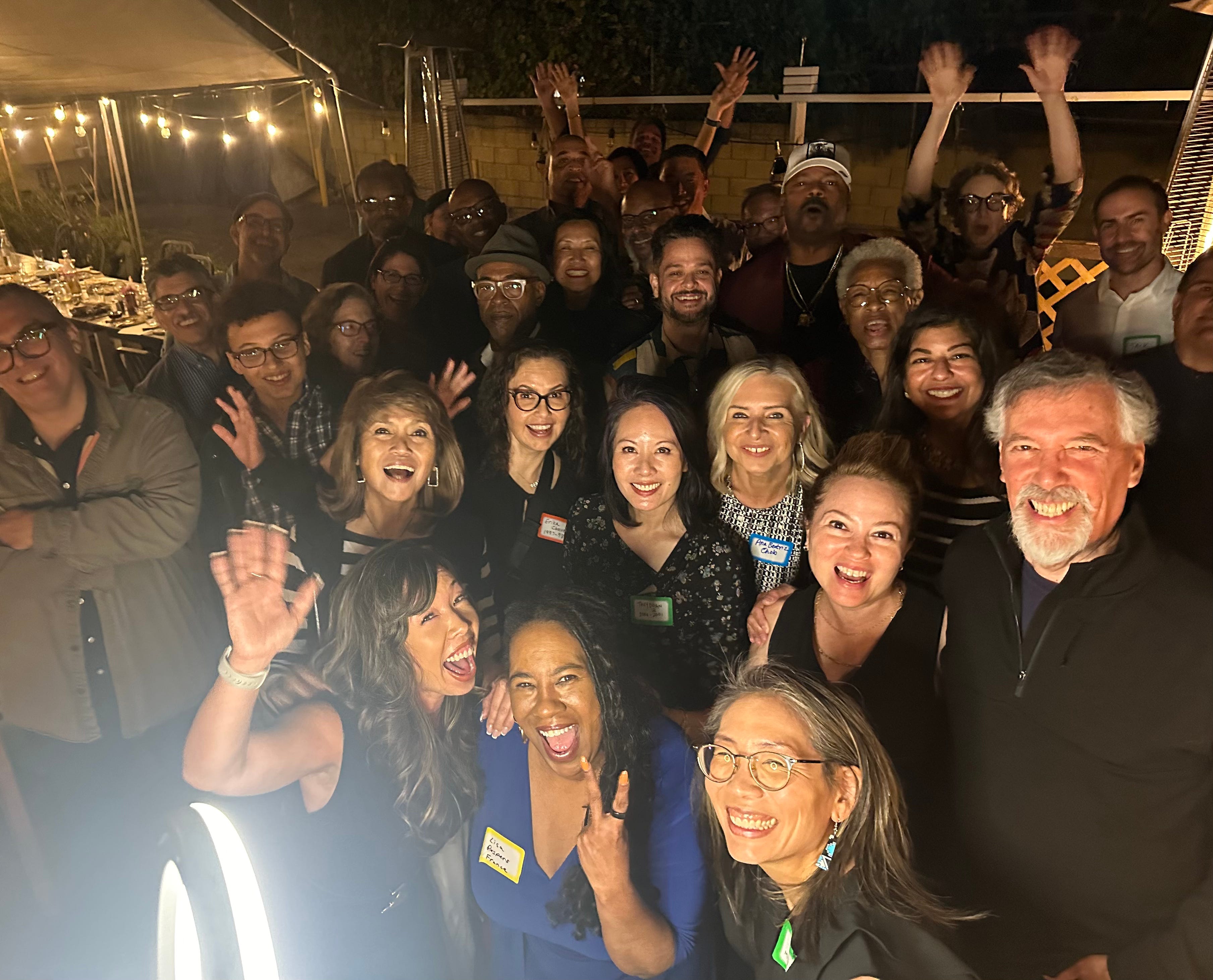
Here is a social media clip I stitched together in his memory, with videos and photos from a METPRO reunion, a surprise celebration of his 80th birthday last year. In it, you can hear his resonant voice, from his podcast, as he speaks about life’s “forks in the road.”
Richard gave me, and so many other journalists, our turning-point moments. He pushed us to be better writers and reporters, but he was also nurturing and deeply passionate about life, family, and community. He taught us how to show up for others and pass on knowledge. He was also one of the early supporters of this Substack, which was created with the spirit of mentoring and sharing that Richard and others instilled in me.
One specific lesson I remember learning from Richard came when I was 21. I still share it with my own students. He called it “The Torrance Test,” referring to the city in Los Angeles County.
My METPRO reporter trainee class was comprised of 12 young journalists, hired from different parts of the country, with totally different backgrounds. I always felt like this was our own “Real World” experiment. For almost a year, we worked together—and also lived together, in the same Burbank apartment complex, which was also home to many child actors. By day, we were thrown into the streets of Los Angeles, from Skid Row, to Hollywood, to Compton, with a mission to search for story ideas.
At the end of a day of field reporting, we met in a conference room at the former Los Angeles Times building downtown and pitched our ideas in front of each other, and to him. The best ones, Richard helped us pitch to editors at the newspaper.
I remember my palms sweating one day as Richard shot our ideas down, one by one.
“What is it about this story idea that will make someone in Torrance care about what is happening in Santa Monica?” he said. “What will make someone in Long Beach or Inglewood care about what is happening in Torrance?”
He pushed us to find the universal meaning in our stories. And I carried that lesson with me later into national reporting, asking myself the same question: What would make a reader in Torrance feel compelled to read a story about a stranger in Southampton, New York, or Manhattan?
Universal meaning can’t be defined in topical terms. It’s not a subject matter, like a city council vote. It’s the shared emotions and inclinations that drive citizens to attend a city council meeting in the first place.
Over the years, I’ve come to think about universal meaning in existential terms. It’s the feeling that underlies everything about why we tell, read, think, and live by stories. Who are we and why? What makes us human? How did we get here? What pulls us apart? What keeps us going? Where do we turn next? What connects us to each other?
That is what Richard also left us. An essence, and a spirit of connection. It’s the feeling that resonates and endures, even after the stories and the people who tell them or live them are gone.
Rest in peace, Richard.
Dear Mr. Kipling
Thank you for your great thoughts & even greater questions.
For blazing a trail…
In teaching Erika, some of us lucked out & got to be taught be her.
The trickle down theory or ever widening ripples in a pond after a rock is tossed in.
Respect & gratitude
Fondly
A student by association
-Lisa
This is a beautiful tribute Erika to a man who has certainly left a wonderful legacy.